
SHOTOKAN
KARATE-DO
Shotokan is the most extensively researched, written-about, and practiced style of Japanese karate in the world, with an estimated 6,000,000 practitioners worldwide and with active clubs in more than 130 countries throughout Asia, Europe, the Americas, Africa, and Oceania.
Fundamentally, Shotokan training unites your mind, body, and technique to create a powerful and decisive responses to an attack. Your training teaches you to observe your opponents carefully, to detect attacking movements at their inception, and to move instantly to protect yiourself. But the physical practice of Shotokan karate is much more than just punching and kicking – it’s a complete framework for your personal development that transcends fighting skills.
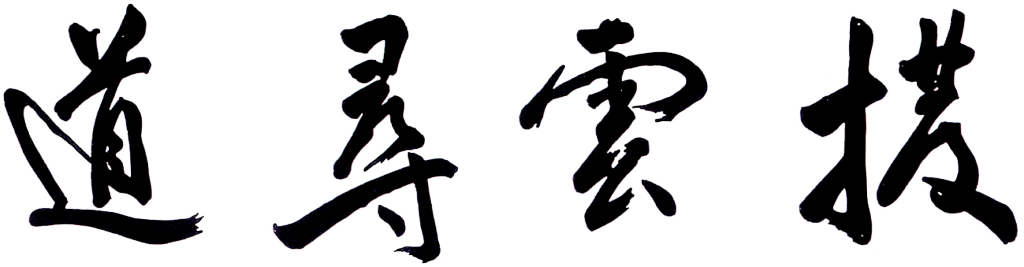
HATSUUN JINDO – Parting the Clouds, Seeking the Way
Calligraphy presented to Gichin Funakoshi upon his arrival to Tokyo c.1922
THE Four “CLOUDS”: SURPRISE, FEAR, DOUBT, CONFUSION.
In classical Japanese martial arts (budo) these four conditions of the mind and heart are called shikai – psychological obstacles that keep you from performing at your best in a conflict, regardless of whether such conflict occurs on the street, in a classroom, at work, or in your personal life.
The practice of Shotokan karate, as an authentic form of Japanese budo, provides a form of moving meditation and active study that allows you to examine, understand, and gain control of shikai – the mental fog that often undermines our progress in the world.
Learning Shotokan Karate
There are three inter-related areas of training in Shotokan:
Kihon: isolating and studying the fundamental techniques of karate, the building blocks for more complex training. When practicing kihon, you'll be challenged to improve individual elements of karate such as balance, breathing, correct form, focus, speed, and power.
Kata: combinations of kihon in structured patterns. In kata, you'll test your ability to perform kihon in sequences that further develop mastery of balance, rhythm, and coordination. Changing tempo, changing direction, examining elements of strategy and tactics, and using different levels of speed, power, and focus are all part of kata practice. At a more advanced level, kata provide a template for many less obvious applications of controlling opponents with grappling, immobilization, and throwing techniques.
Kumite: testing mastery of your techniques in practice with a live partner. In kumite, weaknesses that are not observable in solo practice can be detected, isolated, and corrected. Learning to properly control distance, control timing, control targeting, and control the application of power are all important objectives of kumite practice.
Our club follows the technical model for Shotokan developed in the 50’s, 60’s and 70’s by the Japan Karate Association (JKA), published in the writings of JKA Chief Instructor Masatoshi Nakayama.
General Comparisons to Other Martial Arts
Shotokan emphasizes powerful “straight line” techniques that are intended to stop an attacker with a single strike. In comparison to most Chinese martial arts like Kung Fu and Tai Chi, Shotokan has fewer large circular movements and uses a somewhat more simplified approach to unarmed combat. Most blocks in Shotokan are intended to be full attacks or counter-attacks on the opponent’s arms and legs.
Shotokan is a striking art that uses the hands, fingers, arms, elbows, knees, and feet as weapons. In comparison to Japanese arts like Aikido, Shotokan has fewer grappling, throwing, and passive response/control techniques.
Shotokan karate does not include ground fighting techniques as commonly found in arts like Judo or Brazillian Jiujitsu.
Although some groups and individuals may participate in tournament competitions as an adjunct to their core training, Shotokan is not sport-focused like Olympic Tae Kwon Do, boxing or MMA. Our practice is suitable for children and adults of all ages and has a much lower rate of injury when properly taught and practiced than common sports like football and basketball.
The study of Japanese/Okinawan weapons is not part of our Shotokan curriculum.
FROM OKINAWA TO BUCKS COUNTY
Bucks County Shotokan is proud of our lineage, extending back through countless individuals who advanced the refinement of karate-do. Here are some of the key people who contributed to our modern understanding and practice:
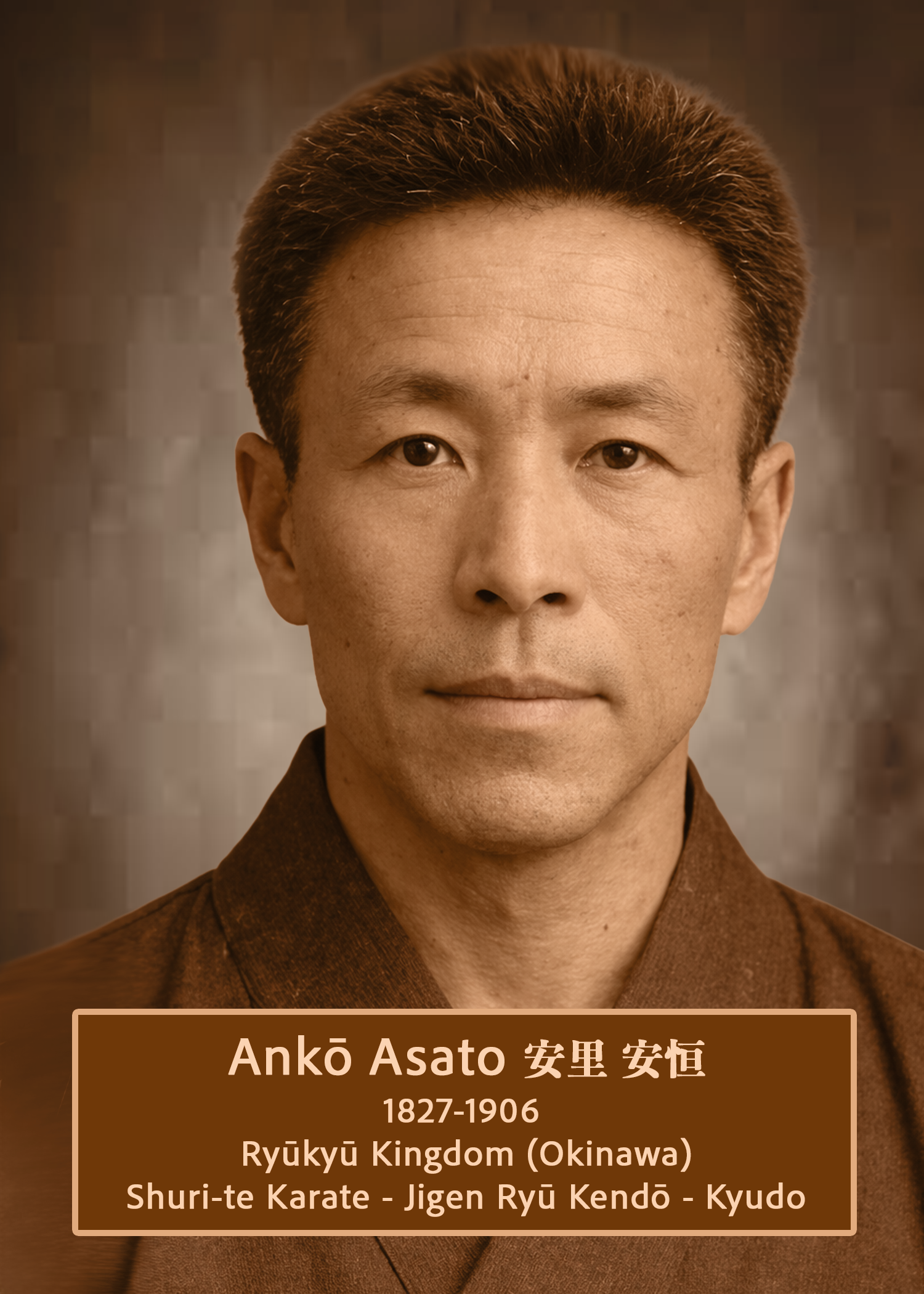
Anko Azato was a highly respected Okinawan karate master, scholar, and member of the Ryukyuan aristocracy, whose influence helped shape the early development of modern karate. A student of the legendary Sokon Matsumura, Azato was known not only for his technical skill, but also for his intellect, discipline, and deep understanding of strategy.
Azato served as a teacher and close mentor to Gichin Funakoshi, who would later introduce karate to mainland Japan. Under Azato’s guidance, Funakoshi was exposed to a method of training that emphasized precision, efficiency, and mental clarity. Azato believed that true mastery required not only physical ability, but also the cultivation of character, awareness, and restraint.
Renowned for his calm demeanor and analytical mind, Azato approached martial arts with a strategic perspective influenced by his study of classical Chinese texts and military theory. He emphasized that technique should be direct and purposeful, avoiding unnecessary movement, and that a practitioner must develop the ability to read an opponent and respond with decisive timing.
Unlike some of his contemporaries, Azato did not seek public recognition or formalize his teachings into a widespread system. Instead, his legacy was passed through a small number of dedicated students, most notably Funakoshi, who carried forward Azato’s principles into what would become Shotokan karate.
Though less widely known than some of his peers, Azato’s influence is deeply embedded in the philosophical and technical foundations of modern karate, particularly in its emphasis on discipline, efficiency, and the unity of mind and body.

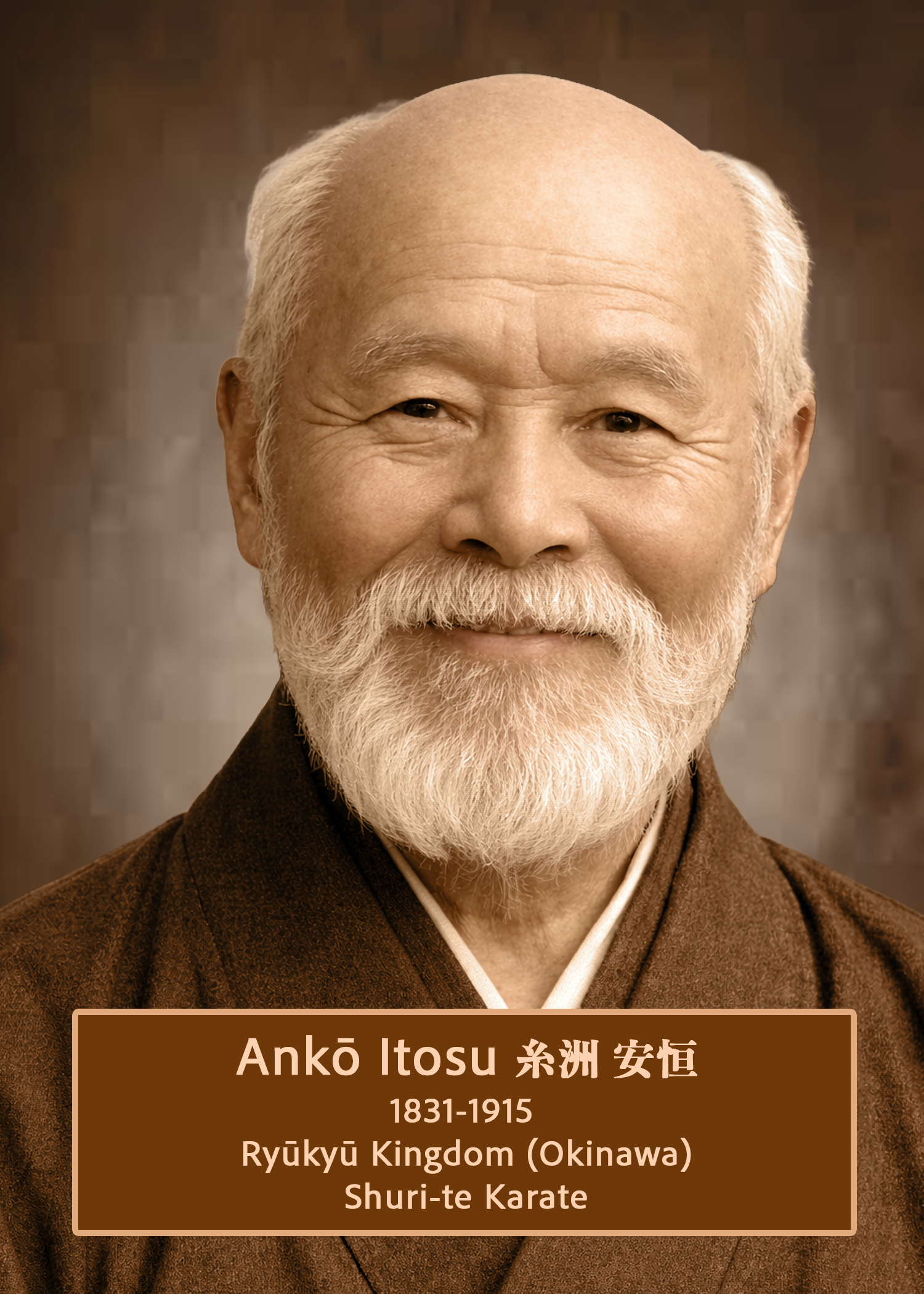
Anko Itosu is widely regarded as one of the most important figures in the development and preservation of Okinawan karate. A student of Sokon Matsumura and closely associated with fellow Okinawan master Anko Azato, Itosu played a central role in transforming karate from a closely guarded martial practice into a system that could be taught openly and passed on to future generations.
Living during a time of significant social and political change in Okinawa, Itosu recognized that karate’s survival depended on its adaptation. He was instrumental in introducing karate into the Okinawan public school system, believing that its training could develop not only physical strength, but also discipline, respect, and moral character in young students. This decision marked a turning point in karate’s history, shifting it from a private art, taught in secret to very small groups of trusted students, to a public and educational practice.
To support this transition, Itosu simplified and systematized many aspects of training. He is credited with creating the Pinan (Heian) kata series, designed to provide a structured progression for beginners while preserving the essential principles of traditional techniques. His approach emphasized strong fundamentals, stable stances, and decisive movement, qualities that remain central to Shotokan karate today.
Through his vision and leadership, Itosu ensured that karate would endure beyond his generation. His influence can be seen in the teachings of his students, particularly Gichin Funakoshi, and in the continued practice of karate around the world today.
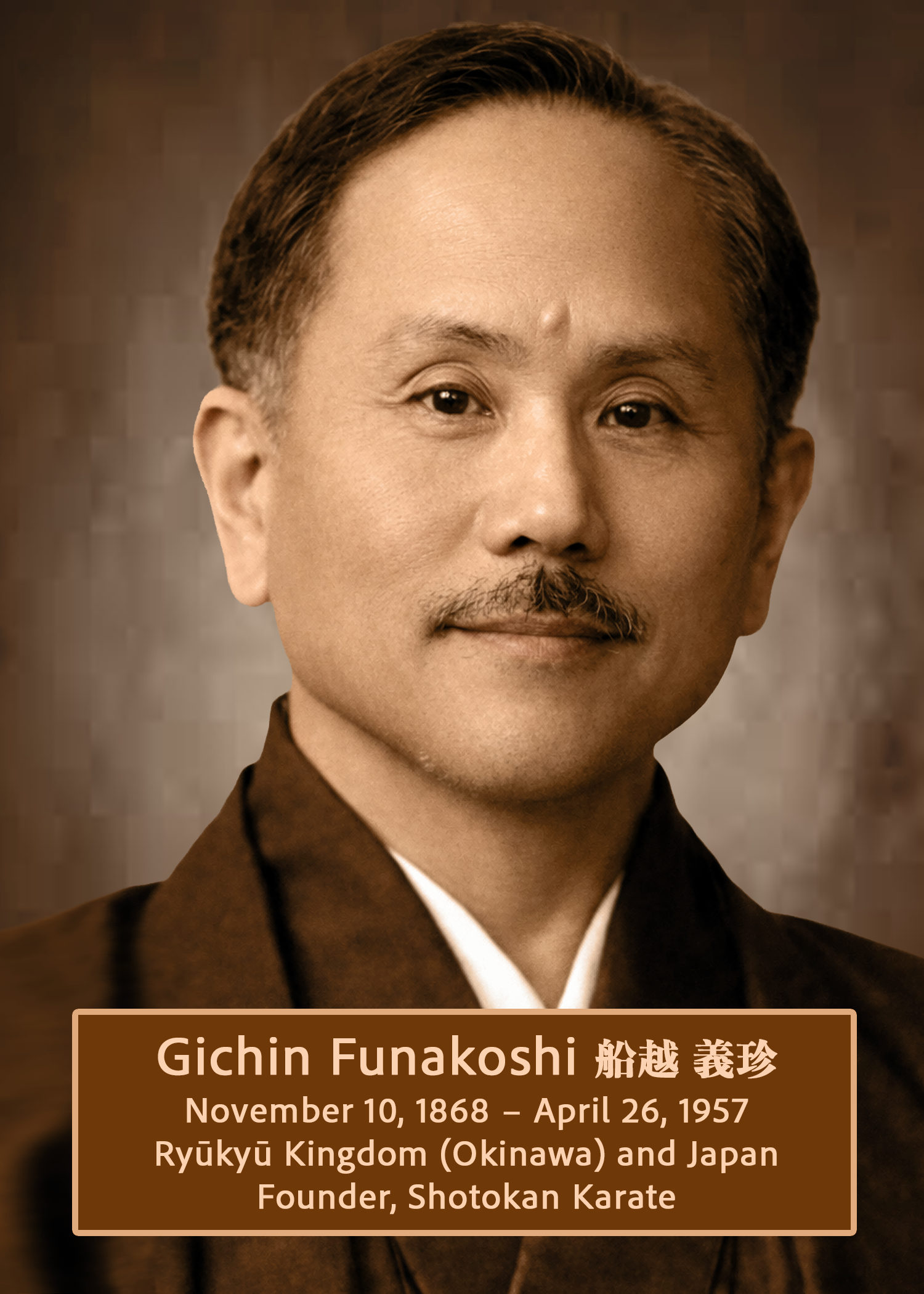
Gichin Funakoshi is widely regarded as the founder of modern Shotokan karate and the individual most responsible for introducing karate from Okinawa to mainland Japan. A direct student of both Anko Itosu and Anko Azato, Funakoshi combined their teachings with his own philosophy to create a disciplined and accessible martial art for everyone.
In 1922, Funakoshi was invited to demonstrate karate in Tokyo, marking the beginning of its spread throughout Japan. His emphasis on etiquette, humility, and self-control helped establish karate not only as a method of self-defense, but as a way of life.
Funakoshi also introduced the use of standardized kata, a formal ranking system, and a strong philosophical framework centered on the Dojo Kun and the principle that “the ultimate aim of karate lies not in victory or defeat, but in the perfection of character.”
His first permanent training location (dojo) in Japan was established in 1936 in the Mejiro district of Tokyo. This location was named "Shotokan" - the Hall of Shoto - by his students in honor of the pen name “Shoto” that Funakoshi used for his poetry writings. Although the building was destroyed in 1945 during World War II, the style of karate that evolved from Funakoshi's original dojo retains the name Shotokan.
Through his teaching, writing, and example, Funakoshi laid the foundation for the global practice of karate, influencing generations of practitioners around the world.
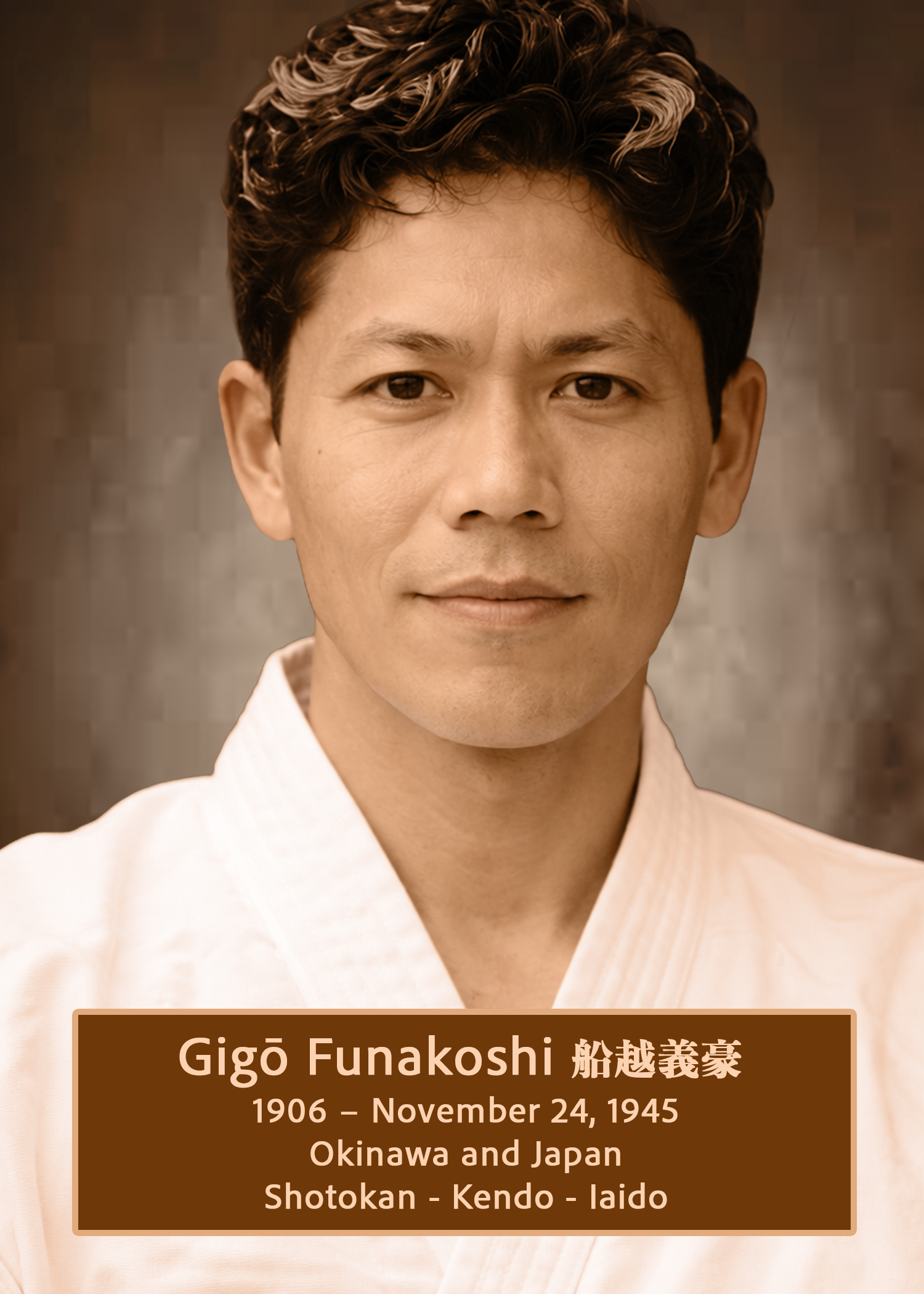
Yoshitaka “Gigo” Funakoshi, son of Gichin Funakoshi, was a pivotal figure in the technical evolution of Shotokan karate. Whereas his father was instrumental in introducing karate to mainland Japan, Gigo was instrumental in refining and advancing its physical expression, helping to shape what is recognized today as modern Shotokan.
Training from a young age, Gigo developed a dynamic approach that emphasized deeper stances, increased speed, and powerful, decisive techniques. He introduced many of the kicking methods now central to Shotokan practice, including mawashi geri (roundhouse kick) and yoko geri (side kick), expanding both the range and effectiveness of the art. His influence also extended to kumite (sparring), where he helped move training toward a more realistic and structured format.
Despite facing serious health challenges throughout his life, Gigo trained with remarkable intensity and dedication. His commitment to pushing the boundaries of technique and performance left a lasting mark on generations of practitioners.
Though his life was tragically short, his contributions endure in the strong, dynamic character of Shotokan karate practiced around the world today.
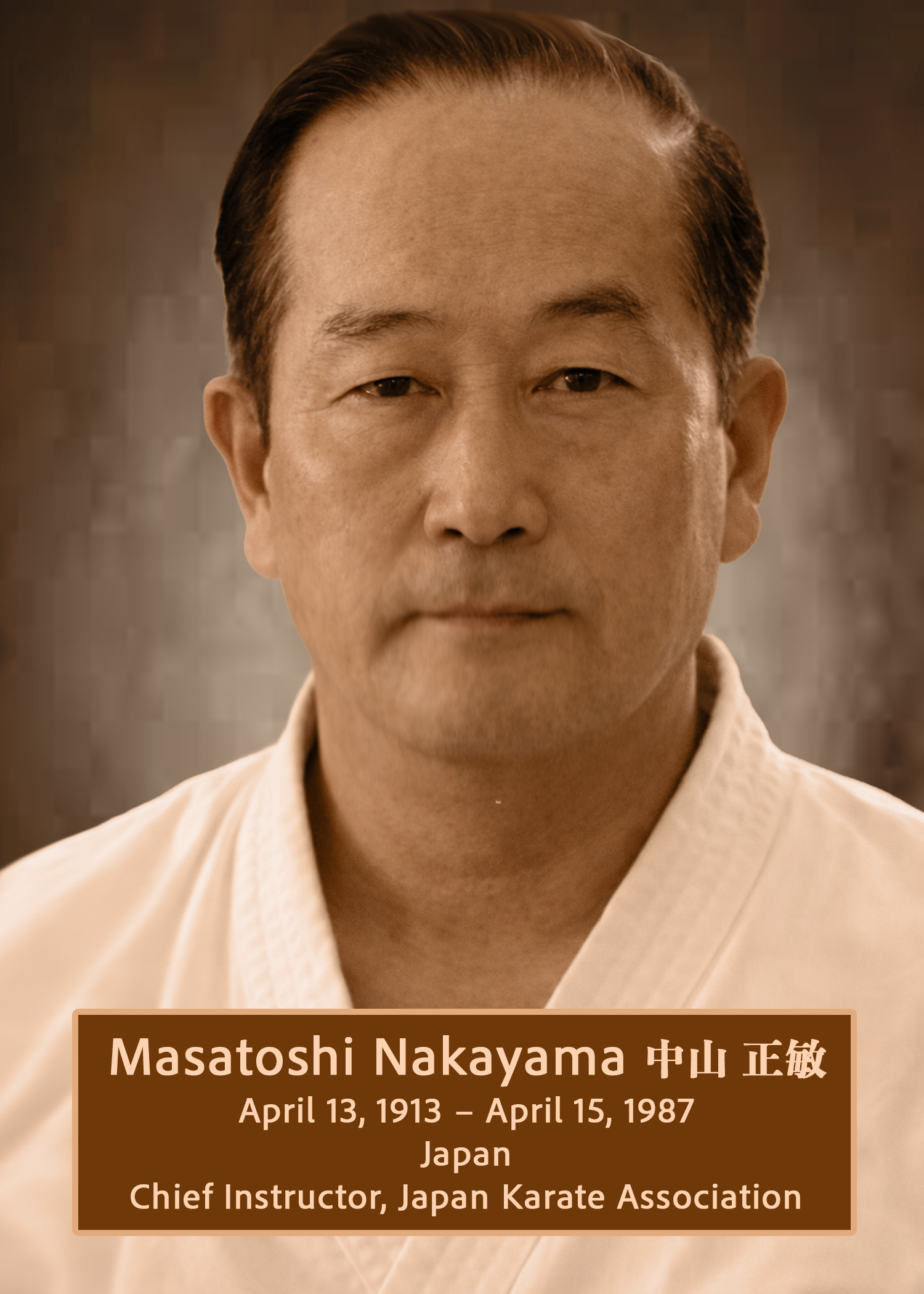
Sensei Masatoshi Nakayama was one of the most influential figures in the worldwide development of Shotokan karate. A direct student of Gichin Funakoshi, Nakayama began his study at Takushoku University Karate Club, where he later played a key role in shaping a structured and rigorous training system.
As Chief Instructor of the Japan Karate Association (JKA), Nakayama helped complete the transformation of karate from a traditional Okinawan art into a modern, globally practiced discipline. He introduced standardized teaching methods, formalized instructor training, and emphasized the scientific study of movement, timing, and power generation. His efforts ensured that Shotokan could be taught consistently across cultures while preserving its core principles.
Nakayama was also a prolific author, best known for his Best Karate series, which remains a foundational resource for practitioners around the world. Through his leadership, instruction, and writings, he trained and influenced many of the instructors who carried Shotokan karate to Europe, the Americas, and beyond.
His legacy endures in dojos worldwide, where his commitment to precision, discipline, and continuous improvement continues to guide serious students of karate.
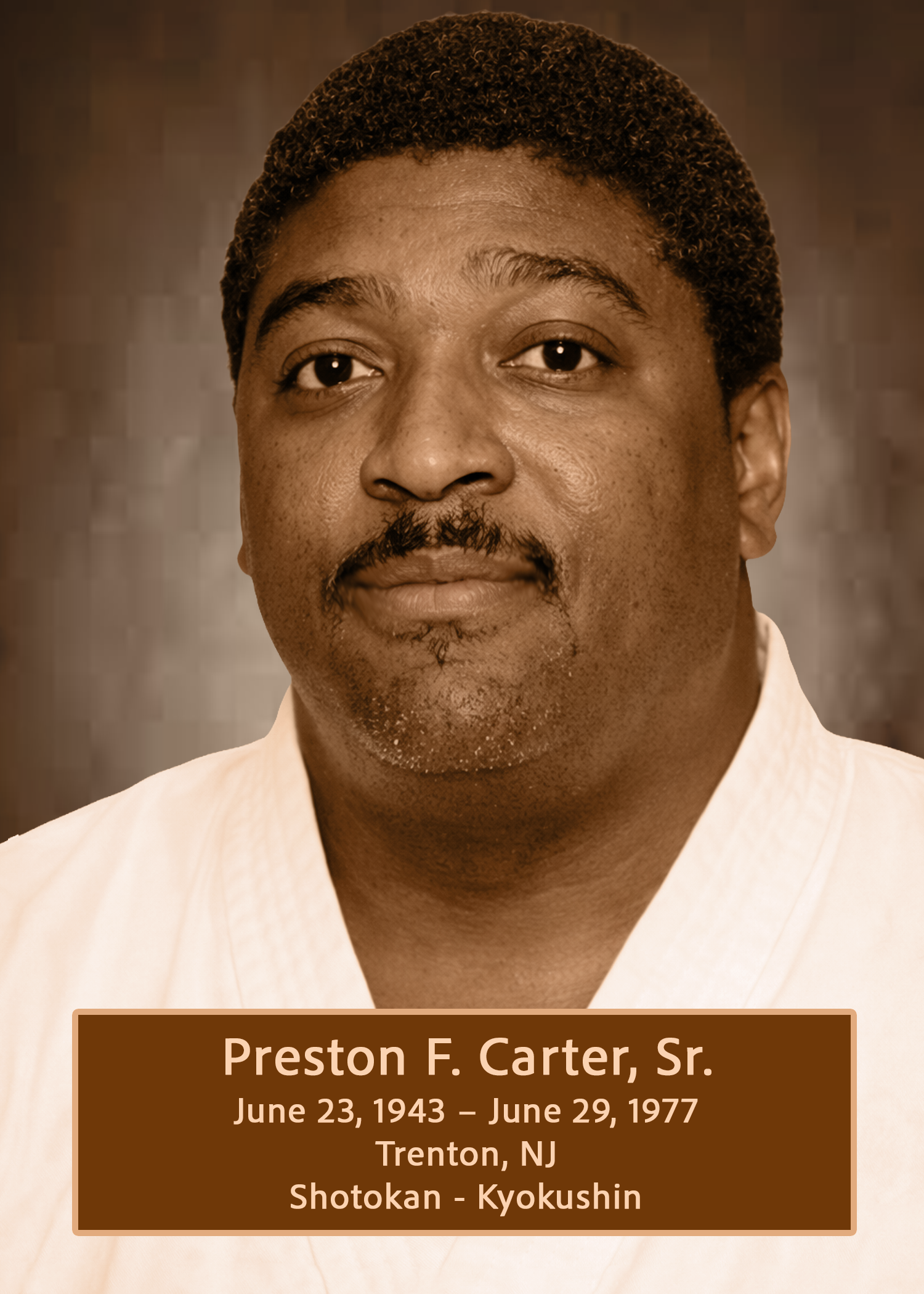
Sensei Preston Carter began his training overseas while serving in the United States Air Force, primarily with the JKA under Sensei Masatoshi Nakayama, at the Seishukan dojo of Sensei Minoru Nishida (Shito-ryu), and with Kyokushin founder Mas Oyama, earning the rank of black belt in the Shotokan and Kyokushin styles before returning to the United States.
Sensei Carter was a groundbreaking teacher who taught karate to thousands of students throughout the New York, New Jersey, and Pennsylvania regions. He was one the first African-American martial artists to be recognized as a master, and one of the first karate instructors to break color lines and welcome students of all races in the still highly-segregated era of 1960's karate.
Tragically, in 1972 he was shot in the back and paralyzed from the waist down.
Reflecting his indomitable spirit, after a short time he returned to both teaching karate AND publicly demonstrating what was possible for those who used a wheelchair. He founded the first organization in the United States for martial artists with physical disabilities and in doing so, left a legacy of inspiration and inclusion that continues to impact the lives of people, generations later.
All of us who follow in his karate lineage are committed to continuing his legacy, providing access for all and helping everyone who would seek ways to break through barriers that, initially, seem insurmountable.
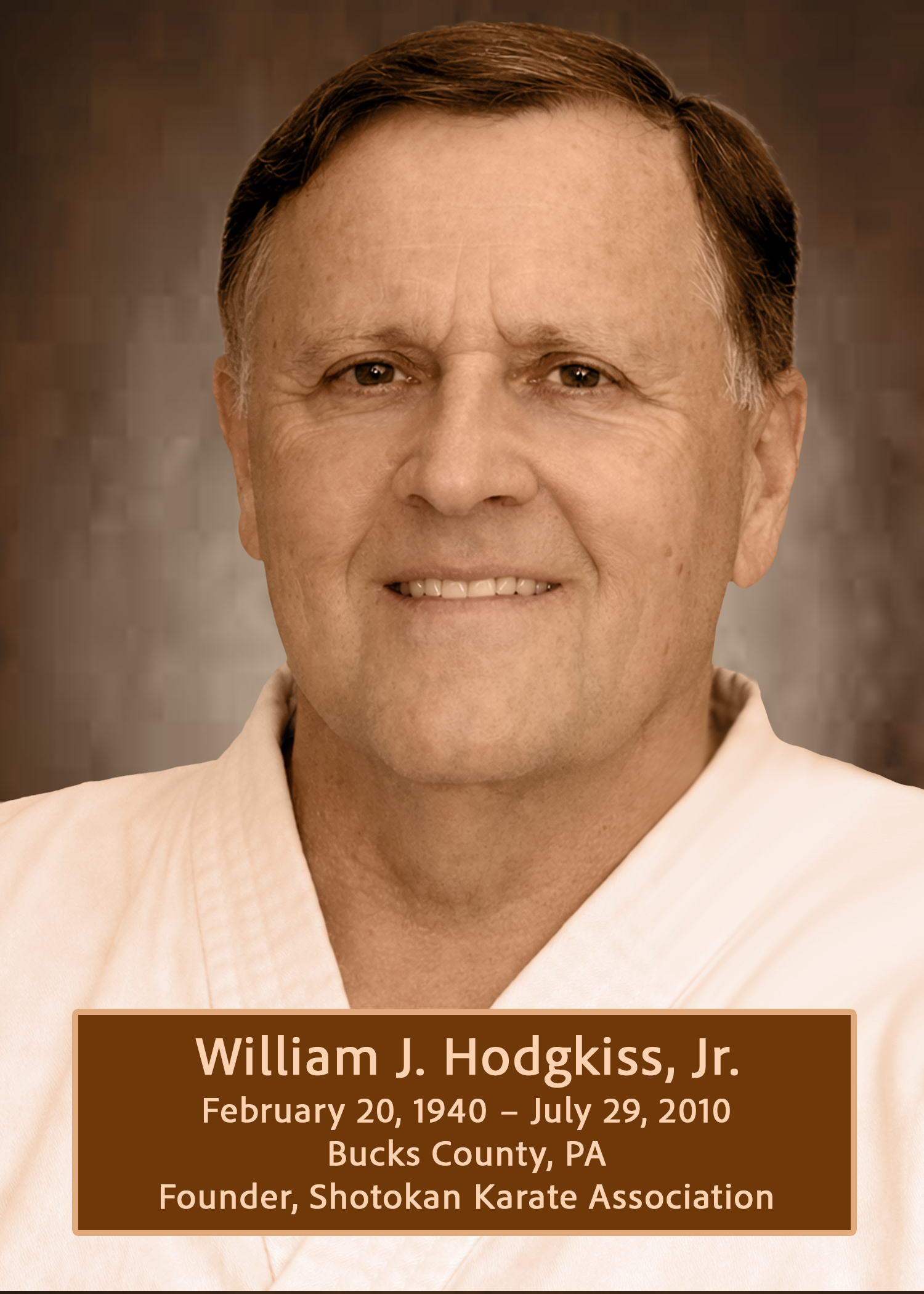
Sensei Bill Hodgkiss began his training in 1964 at the Trenton (NJ) YMCA under Sensei Preston Carter. and earned his Shodan (1st degree black belt) in 1967.
The late 60’s were an exciting time for Shotokan practitioners in our area. Sensei Teruyuki Okazaki, Sensei Yokota, and Sensei Katsuya Kisaka had arrived in the area and Sensei Hodgkiss, along with fellow student Ed Goodrich, had begun training with their group as well. In 1967, Sensei Kisaka and Sensei Okazaki ended their joint training arrangement. Sensei Hodgkiss chose to remain neutral in their disagreement, forming a small group of fellow students to continue training independently at the Fairless Hills YMCA. This group became known as the Bucks County Karate Association.
Through the late 60’s into the early 70’s Sensei Hodgkiss’s group thrived, producing a second generation of students who went on to form their own karate clubs throughout the area, expanding outside of Bucks County and into New Jersey and Maryland. By the early 80’s, our organization had over 25 active clubs and our name was officially changed to the Shotokan Karate Association to reflect our geographic diversity.
Over 350,000 people have trained with the Shotokan Karate Association since 1968. Today, SKA clubs are run by 2nd, 3rd, and even 4th generation students of Sensei Hodgkiss.